
This is a blueprint for discussion—not implementation advice for any specific company or vendor.
If you run a multi-site operation, you already know the truth about maintenance at scale: the biggest enemy is not the wrench—it’s distance. When factories and distribution sites are spread across regions, the people who know the equipment best are rarely standing next to it when it fails. And when a critical asset goes down, the business impact is immediate: throughput drops, service windows tighten, and risk moves from “technical” to “operational” in minutes.
The pain: why large enterprises struggle to repair fast
Most large organizations experience a predictable set of maintenance headaches:
- Specialized expertise is distributed, and escalation cycles are slow—especially across time zones.
- Equipment is mixed-OEM, documentation is fragmented, and “every site is slightly different.”
- Troubleshooting quality varies by shift because knowledge lives in individuals, not systems.
- Downtime cost is real but often hidden in overtime, rerouting, penalties, and missed commitments.
In many incidents, the repair isn’t the hardest part. The hard part is getting to certainty quickly and safely.
Solution direction: industrial AR smart glasses
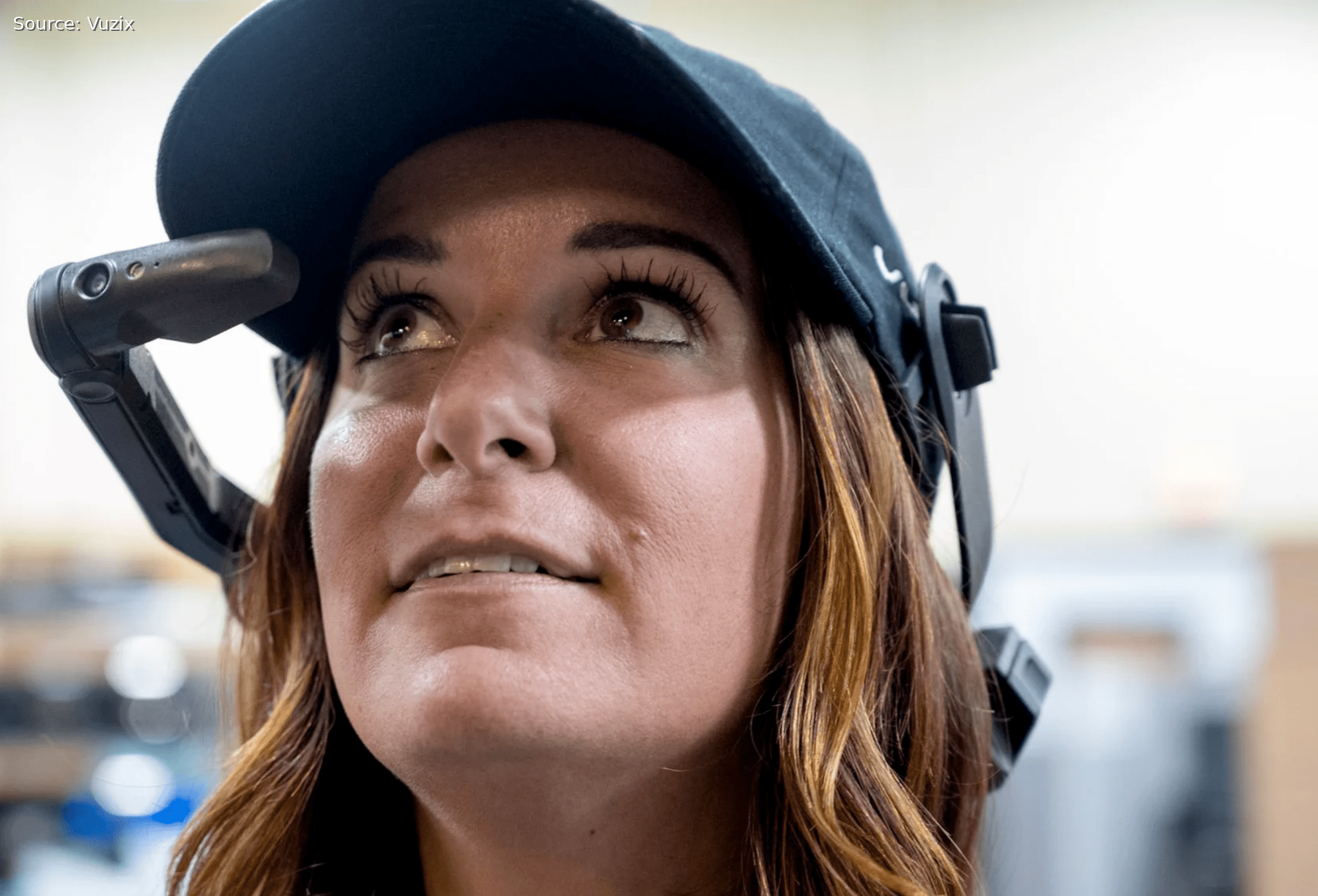
Industrial AR smart glasses solve a very practical problem: they deliver hands-free, real-time support in the technician’s field of view. A remote expert can see exactly what the onsite technician sees and guide them with visual cues.
But AR alone doesn’t create enterprise learning. A great remote session can still end as a one-time save, with no structured record and no reusable knowledge.
That’s where SAP AI agents come in.
The SAP concept: AR as the eyes, Joule as the brain
Here’s the framing:
- AR glasses provide hands-free, real-world context.
- SAP remains the trusted system of record for assets, maintenance history, and execution.
- SAP AI agents (Joule-based) provide guidance, context, and structured outcomes using LLM + RAG + tools.
- SAP BTP provides secure integration and orchestration (identity, API management, governance).
This is not “AI for AI’s sake.” It’s a way to compress the time from failure → diagnosis → resolution, and to ensure the organization gets smarter after every incident.
Why not just Skype or Zoom?
A standard video call looks cheaper until you operate it at scale.
In industrial maintenance, consumer video tools fail for four reasons:
- Ergonomics: phones are unsafe and impractical in real repair work; video is shaky and poorly framed.
- Security & compliance: personal devices and unmanaged recordings create risk and audit gaps.
- Process traceability: calls don’t naturally connect to the equipment record, the maintenance event, and the actions taken.
- No enterprise memory: even when a call solves the problem, the organization rarely captures the resolution in a structured, searchable way.
AR improves the first issue. SAP integration and AI agents address the rest.
How the AR platform works with SAP Joule Agents (hypothetical flow)
A critical line fails during night shift. The onsite technician puts on AR glasses and says: “Start the session.” The device confirms connection health and prompts for an asset scan. The technician scans the equipment tag.
That scan triggers a secure workflow through SAP BTP. A Joule-style agent pulls the relevant SAP context: the asset identity, the recent incidents, and the last successful repair summary. In parallel, the agent performs retrieval against approved enterprise knowledge—internal SOPs and licensed OEM documentation—so it can present a short, safety-aligned triage, tailored to that exact asset type and fault pattern.
If escalation is needed, the technician says: “Invite expert.” The remote expert joins by browser link, but they are not starting blind. They see the live view plus the SAP context and the triage steps already performed. This compresses the first 10–15 minutes of a typical remote call into seconds.
During the session, the expert guides visually (pointer + stop/check cues). Meanwhile, the agent captures what matters: the confirmed diagnosis, the key steps performed, any safety-critical “stop” moments, and the recommended corrective action. At the end, the agent proposes a structured SAP outcome—typically a maintenance notification draft (and optionally a work order draft)—with links to supporting images or short clips stored under corporate retention rules.
The business result is not just a faster fix. It’s an enterprise that learns reliably, across sites and shifts.
Why this matters for profitability
This concept pays off when you apply it to the right assets:
- High downtime cost where minutes matter
- Low local expertise (specialized systems, thin bench)
- Complex OEM documentation
- Repeat issues that should be systematized
The ROI levers are straightforward:
- Reduce time-to-expert
- Increase first-time-fix
- Reduce expert travel
- Shorten training ramp-up
- Improve consistency across sites
At multi-site scale, even moderate improvements become meaningful.
A practical next step: a small pilot
A pilot doesn’t require a platform rewrite. It requires a narrow problem, minimal integration, and measurable outcomes.
A clean starting point is one site + one critical asset family + one primary process: resolve incidents faster and capture outcomes consistently in SAP.
Success should be measured with a small KPI set:
- Time-to-expert
- MTTR for the targeted incident class
- First-time-fix rate
- % resolved without travel
- Repeat incident trend for the same asset type
If those numbers move, scaling becomes a business decision—not a technology debate.
Technical appendix (linkable): Pilot integration—minimal objects and data flow
For a first pilot, keep integration deliberately lean:
- SAP objects: read Equipment/Functional Location + recent notifications; write a PM Notification draft with a short AI summary; attach media links (photos/clips) stored in a governed repository.
- BTP components: IAS/SSO for identity, API Management as the secure gateway, and lightweight integration to S/4HANA EAM/PM.
- Agent tools (minimum): “get asset context,” “retrieve procedure snippet,” “create notification draft,” “attach media link.”
- Governance rule: no direct database access from devices; role-based APIs only; retention and audit logging enabled.
Conclusion
The goal is simple: solve real maintenance problems faster and more consistently. If a small pilot works, you can reuse the same approach to grow a practical SAP Joule Agents platform over time—one business problem at a time—so every fix becomes shared knowledge and the whole organization gets smarter with each solution.
One Comment
ExoWatts
June 17, 2026 at 3:32 pmGreat content! Keep up the good work!